















The history of the stadium, access procedures and regulations governing the use of the stadium and service cards
THE ORIGINS: AN ENGLISH FOUNDER AND AN ENGLISH-STYLE STADIUM
In 1925, AC Milan President Piero Pirelli set in motion the construction of a stadium entirely dedicated to football. A great admirer of English football, Pirelli wanted an "English-style" stadium, with no athletics track, designed solely for the game. The venue was built in a record time of 13 months, between August 1925 and September 1926.
THE FIRST MATCH AT SAN SIRO
On July 4th, 1926, AC Milan played their last league match at Viale Lombardia, beating Sampierdarenese 2-0. On October 3rd, 1926, they faced the same side again, this time at San Siro, in what was the first competitive match at the new stadium. The Rossoneri lost 2-1.
The official inauguration of the venue had already taken place with a friendly derby on September 19th, 1926: newspapers of the time ran the headline "AC Milan's ground inaugurated".
THE ORIGINAL STRUCTURE
The first San Siro was designed by engineer Alberto Cugini and architect Ulisse Stacchini. It featured four independent rectilinear stands in reinforced concrete, one of which was partially covered by a canopy, along with the parterre, for an initial capacity of 35,000 spectators.
The connecting curves did not yet exist, and the stadium also served the needs of the nearby racecourses: some spaces beneath the stands, in addition to hosting changing rooms, showers and offices, were used as stables, hay barns and feed storage. San Siro was built to host AC Milan's home matches. From the 1947/1948 season, it also became Inter's ground.

THE FIRST EXPANSION
After the stadium was acquired by the City of Milan - which on June 3rd, 1934 had already hosted the World Cup semi-final won 1-0 by Italy against Austria - a first major expansion was launched in 1935. Four connecting curves were built between the stands, and the capacity of the two central stands was increased. Once the works were completed, San Siro became a 55,000-seat stadium.
THE YEARS OF GREAT TRIUMPHS
Between the 1960s, 1970s and 1980s, Milan's two clubs enjoyed a period of great international success, winning European and world trophies. The commemorative plaques on the ramps of San Siro stand as a lasting testament to that era.

THE MAJOR REDEVELOPMENT FOR ITALIA '90
For the 1990 World Cup, the stadium underwent a profound transformation. The project was designed by architects Giancarlo Ragazzi and Enrico Hoffer, together with engineer Leo Finzi.
A third tier was added, supported by eleven cylindrical towers arranged around the stadium, housing the access routes to the stands. Four of these towers also support the large beams of the new roof covering the seating areas.
The four sectors are identified by the colours of their seats: red and orange for the straight stands, green and blue for the curves. The resulting 85,700 seats are all covered by polycarbonate panels, ensuring comfort for spectators and natural light for the pitch. A new lighting system and an undersoil heating system, capable of preventing ice from forming, were also installed.
On June 8th, 1990, the stadium hosted the opening match of the World Cup, Argentina 0-1 Cameroon.
THE MOST RECENT UPGRADES
In summer 2008, following works to bring the stadium up to UEFA standards, its capacity was adjusted to 80,018 seats. Further upgrades were carried out in summer 2012 and on later occasions.
The management of the stadium and related activities - including trademarks and retail outlets - is overseen by M-I Stadio Srl, a company founded on December 12th, 2011 from the transformation of the Consorzio San Siro Duemila.
THE CENTENARY OF THE SCALA DEL CALCIO
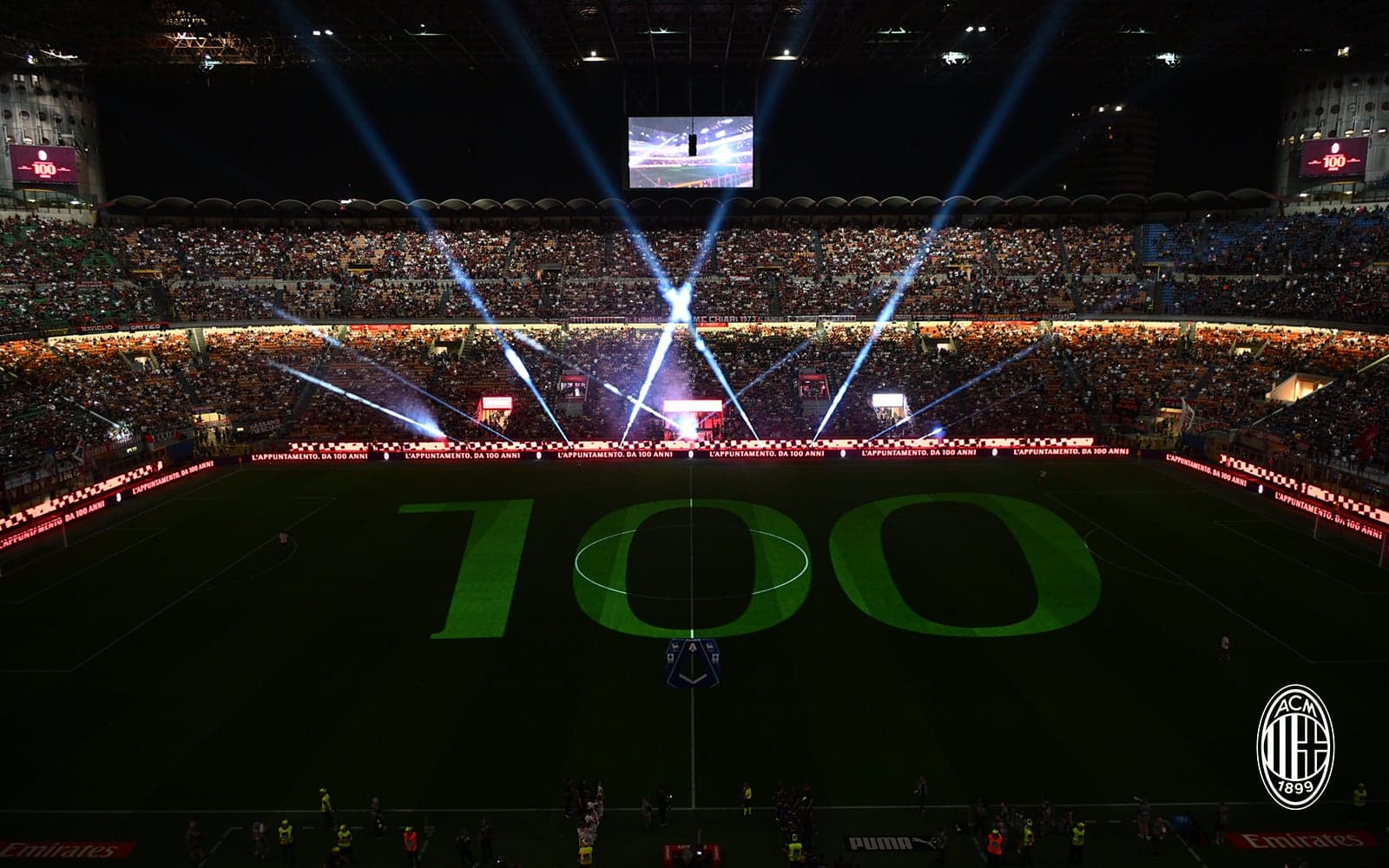
On September 19th, 2026, San Siro turned 100. For a century, one of the most iconic venues in world sport has welcomed some of the greatest players of all time to its pitch, match after match, whether wearing AC Milan colors or those of opposing teams. A stage for major events, concerts and shows, San Siro remains a symbol of the passion shared by millions of fans.
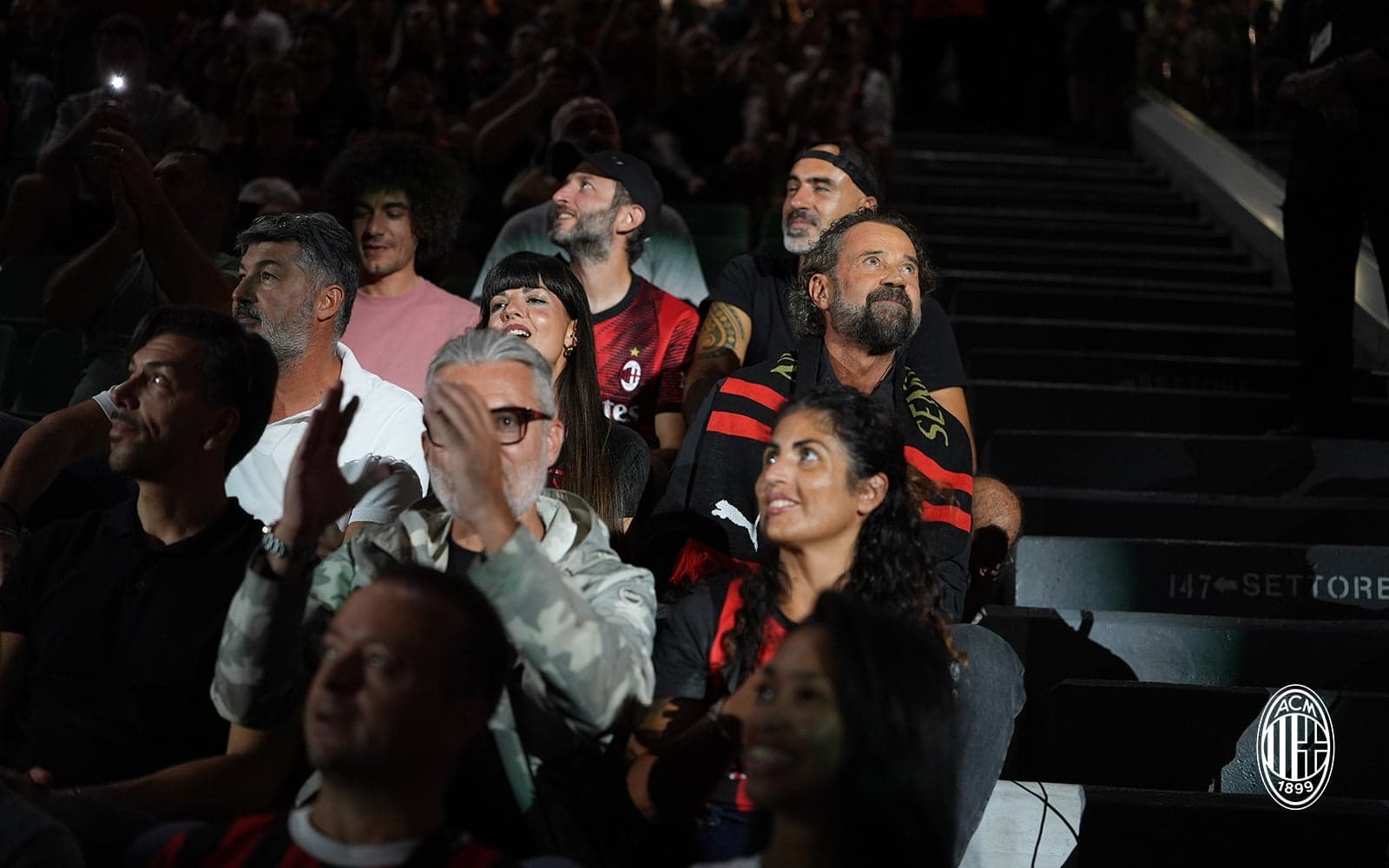
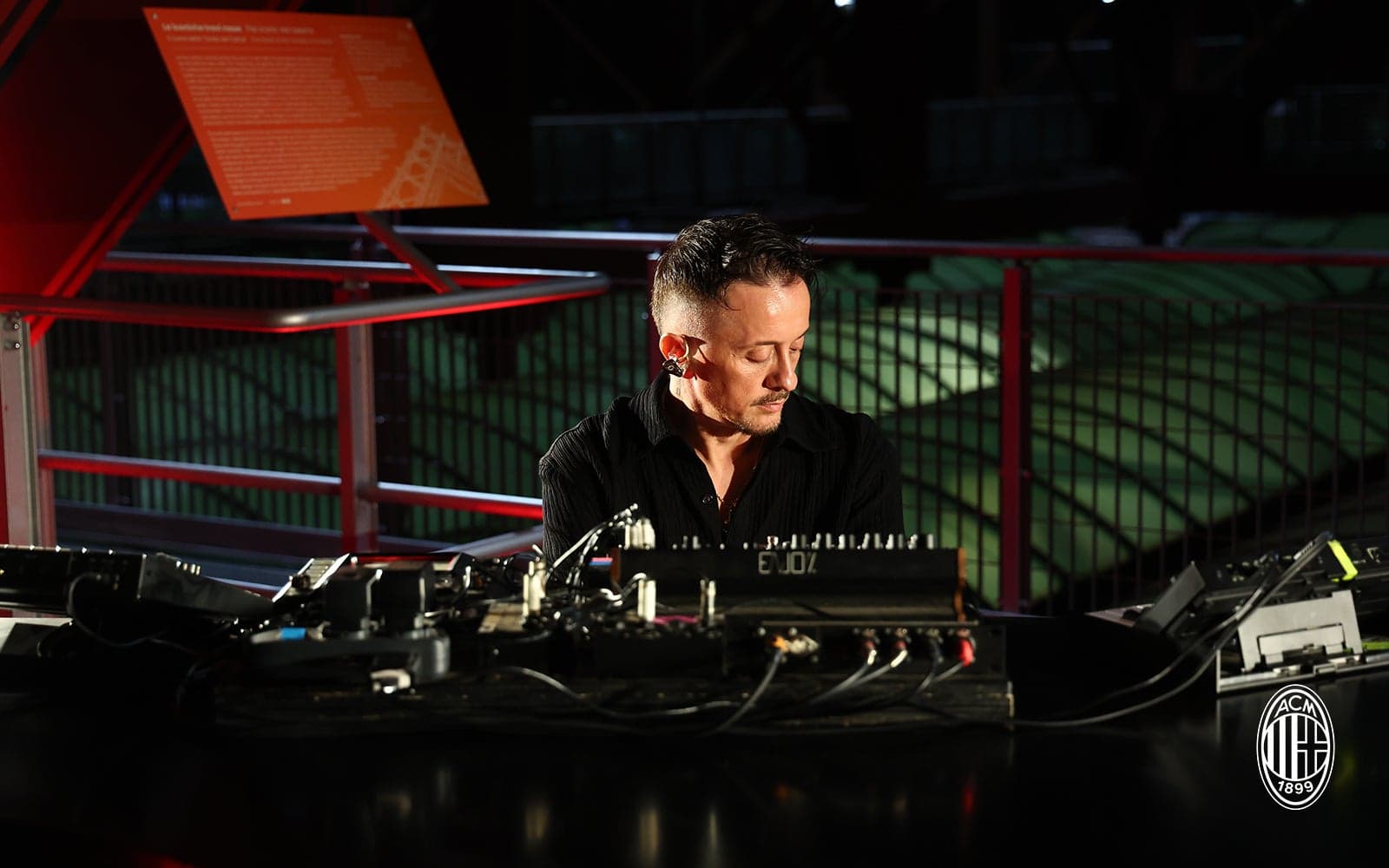
To mark the anniversary, the Club presented a show combining lights, images, music and storytelling during AC Milan vs. Lecce on September 20th, 2026. The performance revisited the many moments that have shaped the lives of Rossoneri fans at the stadium, through sport and beyond. It featured internationally renowned Italian artists including Fabio Volo, a writer, actor and radio host, and Dardust, a pianist, composer and record producer.