
















PUMA's RE:FIBRE textile-to-textile recycling programme uses polyester textile waste from factory off-cuts, faulty goods, and pre-loved clothing as the primary source of material to create new textiles. Through RE:FIBRE, PUMA aims to reduce textile waste and become less reliant on using plastic bottles to produce the recycled polyester used in our products.
We accept all apparel brands. Please only return freshly washed garments.
We are sorry, but we do not accept underwear, socks, footwear or swimwear.
Items not suitable for recycling will be donated to the "Vesti Solidale" non-profit cooperative, which will use them for projects supporting individuals and families in situations of significant social hardship.
Fans can drop off their clothes in designated bins located at our stores (Casa Milan, San Babila, via Dante).
The main difference is that most of the raw material used for the RE:FIBRE is recycled from existing polyester garments, allowing for garment-to-garment recycling. This technology is a big step towards closing the material loop on polyester.
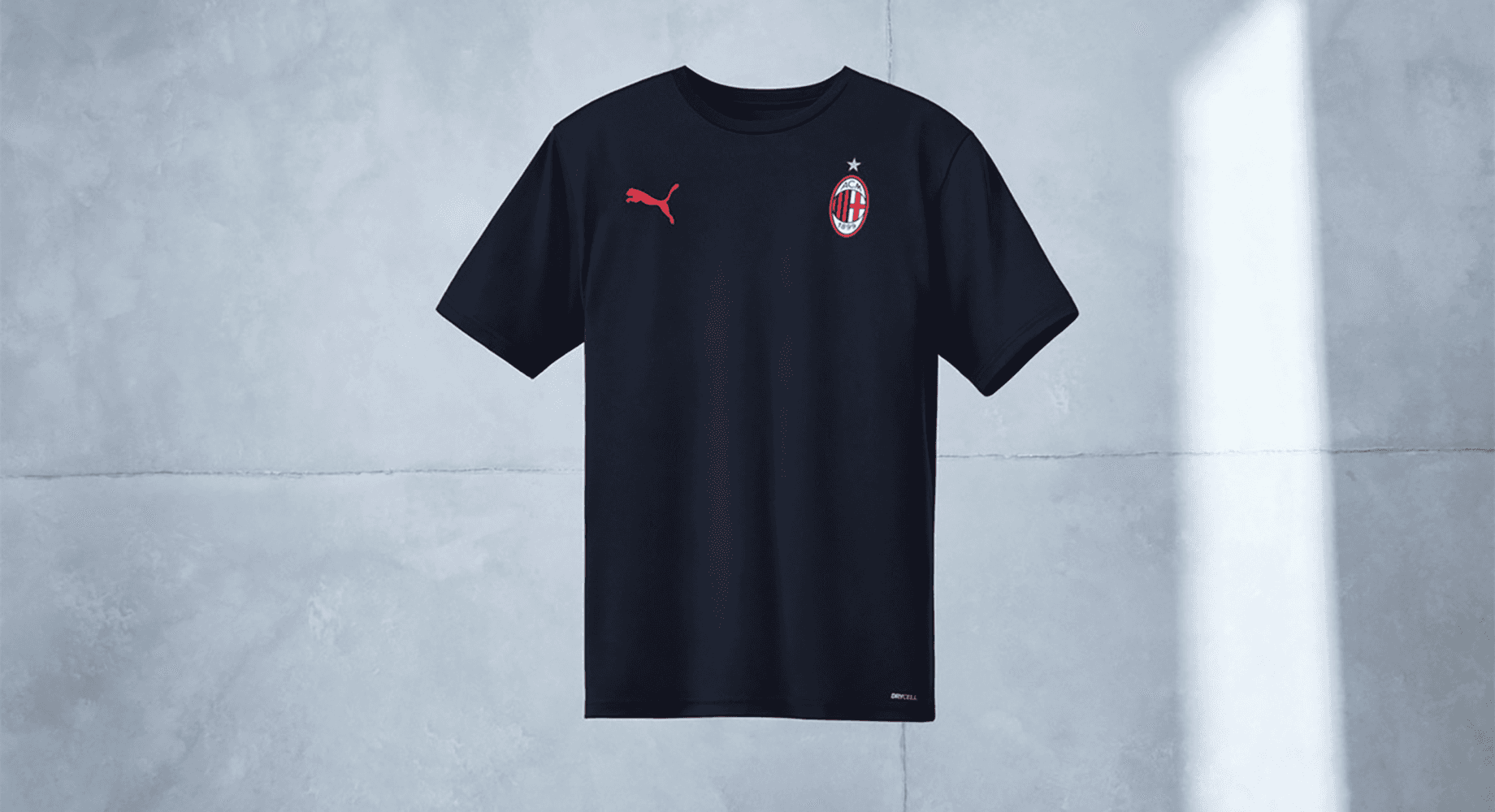
The RE:FIBRE are made with 75% repurposed football jerseys. The remaining 25% comes from SEAQUAL ® MARINE PLASTIC .
PUMA's football kits on the market today are already made from 100% recycled polyester. The company has set an ambitious target of 75% recycled polyester until 2025 for the entire apparel and accessories ranges.
Typically, PUMA's recycled polyester products are made from recycled plastic bottles. Plastic bottles can be mechanically recycled into new polyester. While not circular in the classical sense, this type of recycling helps reduce the littering of plastic bottles. In addition, mechanically recycled polyester has a considerably lower carbon footprint compared to conventional polyester.
In the recycling process used for the RE:FIBRE project, the garments are chemically broken down into their main components (depolymerization). Colors are then filtered out, and the material is chemically put back together to create a yarn (repolymerization) that has the same performance characteristics as virgin polyester.
The innovative process used for our RE:FIBRE can deal with contaminations such as prints or emblems. Furthermore, the process is run in Europe, close to the home of PUMA's football teams.
The RE:FIBRE project will allow us to collect valuable experiences on garment-to-garment recycling. If successful, PUMA aims to replicate the process at a larger scale including their retail channels, and potentially wholesale partners.
The fact that oil as a fossil feedstock is replaced by existing garments is the main benefit of chemically recycled polyester, which can be recycled again and again without a loss of quality. Chemically recycled polyester also generates reduced CO2 emissions compared to virgin polyester.
Typically, PUMA's recycled polyester products are made from recycled plastic bottles. Plastic bottles can be mechanically recycled into new polyester. While not circular in the classical sense, this type of recycling helps reduce the littering of plastic bottles. In addition, mechanically recycled polyester has a lower carbon footprint compared to conventional polyester.
No. Products from any brand can be handed in as long as they're made of 100% polyester. We do not accept underwear, socks (for hygiene reasons), footwear, swimwear and accessories.
We ask you to hand in only dry and clean garments.
This is no problem. While this garment cannot be worn anymore by other people, the raw material can still be recycled.
No. This program aims to raise awareness of what happens to products at the end of their lifecycle, reduce waste, and pave the way for a more circular production model. Items not suitable for recycling will be donated to the "Vesti Solidale" non-profit cooperative, which will use them for projects supporting individuals and families in situations of significant social hardship.


